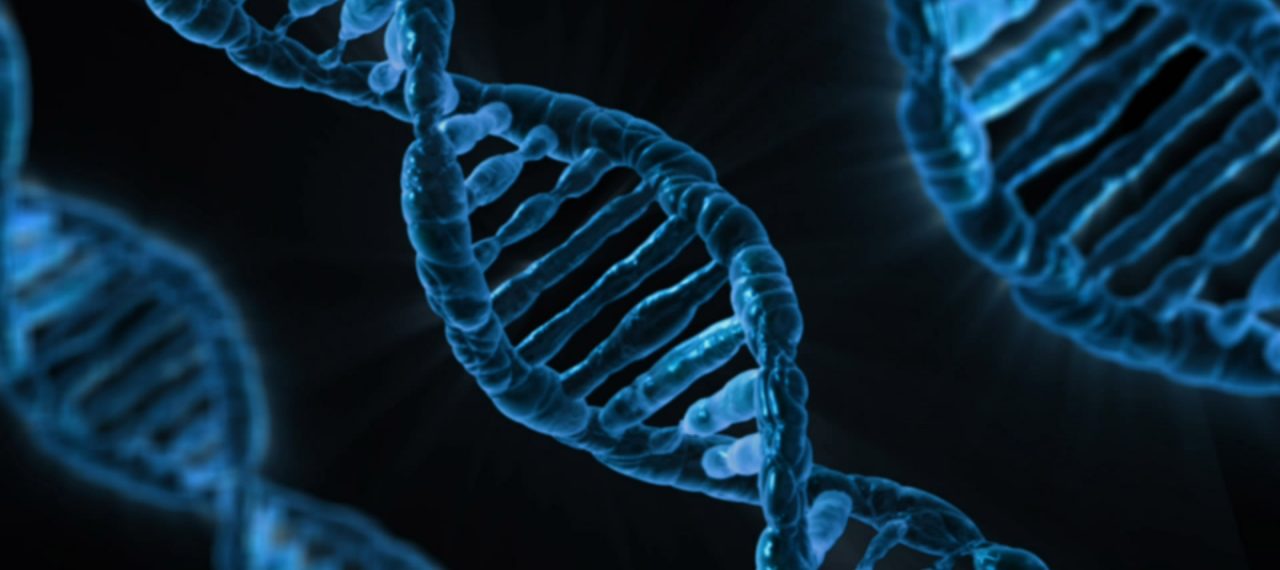
The race for DNA structure
DNA is the backbone of biology and science in general, thus it seems fitting to start a science blog with DNA. Everyone has heard of DNA before, but few people know what it actually does, and a lot of wrong information is spread around in the media. In this article, I will introduce you to DNA by talking about Rosalind Franklin and her involvement in the « race for the DNA structure ». We will cover the basics of DNA structure through the life of Franklin, as well as uncover some lesser known parts of scientific research: the competition between researchers.
Rosalind Franklin was born in 1920 in London, and most of her work was done using a technique called X-ray crystallography, which determines the structure of small molecules or objects. For example, we know the shape of snowflakes thanks to this method. Franklin used it to study the structure of DNA, which was still unknown in the mid 1950s [source / source]. At the time, scientists knew what DNA did, but not how they worked. To better understand the latter parts of Franklin’s life, we need to discuss DNA structure first. DNA stands for deoxyribonucleic acid, and it is made up of complex molecules called nucleotides. There are roughly four types of nucleotides in the DNA: A (adenosine), T (thymine), G (guanine), and C (Cytosine). A gene is composed of nucleotides rearranged in a specific order. A molecule of DNA is composed of many genes placed one after the other. [source / source].
Now you have approximatively the same knowledge Franklin had in the 1950s. Only the overall DNA structure was missing. At the time, she was working with Maurice Wilkins and Raymond Gosling at King’s College London. As more and more data was collected, many theories were in place, and it was a matter of time before the DNA structure was confirmed. Thus started the « race for the DNA structure ». This is a common occurence in research, where many researchers races to find the key missing datas in a project and get all the recognition. In this case, Franklin and Gosling were racing against James Waston and Francis Crick. Both teams were taking pictures of the DNA to understand its shape. Watson and Crick had a solid model, the infamous helix, but they were missing some data. In 1952, a crucial picture, photo 51, was taken by Gosling and Franklin. This picture showed a clear hint to the helical structure that we know today. With this picture, Watson and Crick could confirm their helical model [source / source].
Now during races, it is rare for opposing labs to share their data, as they do not want to give the other team the advantage and lose their discoveries. Then how come Watson and Crick got Franklin’s picture? Simply put, her pictures were shared without her consent. Before 1953, she transferred to Birbeck college, working on the structure of viruses. As she left King’s College, Watson and Crick obtained access to photo 51 and all of Franklin’s work, allegedly because Wilkins gave it to them. In 1953, Watson and Crick published their work on DNA structure, acknowledging Wilkins but not Franklin. This paper will lead them to get the Nobel prize in 1962, along with Wilkins. Franklin however died in 1958 of ovarian cancer, and she remained unrecognized. Her work would have remained unknown had it not been for a mistake Watson made: in 1968, he wrote a memoir where he presented Franklin as a jealous and stupid woman and an overall bad scientist. Fortunately many of her colleagues, including Crick, stepped in and defended her, and making her known to the world [source / source / source].
The story of Franklin is sadly not uncommon. Many scientists have their work stolen or not acknowledged. Her story is also an example of the sexism within the scientific community. Watson’s depiction of Franklin in his memoir is an example, but it is undeniable that Franklin’s lack of recognition at the time was linked to her gender.
This concludes Rosalind Franklin’s story. This is only the beginning of our understanding of DNA, but I wanted to start with Franklin’s story because it trivializes science in a way. Science is not the perfect objectivity that many people think it is, and many scientists are prone to unethical methods to get what they want.
 The Science Decanter